
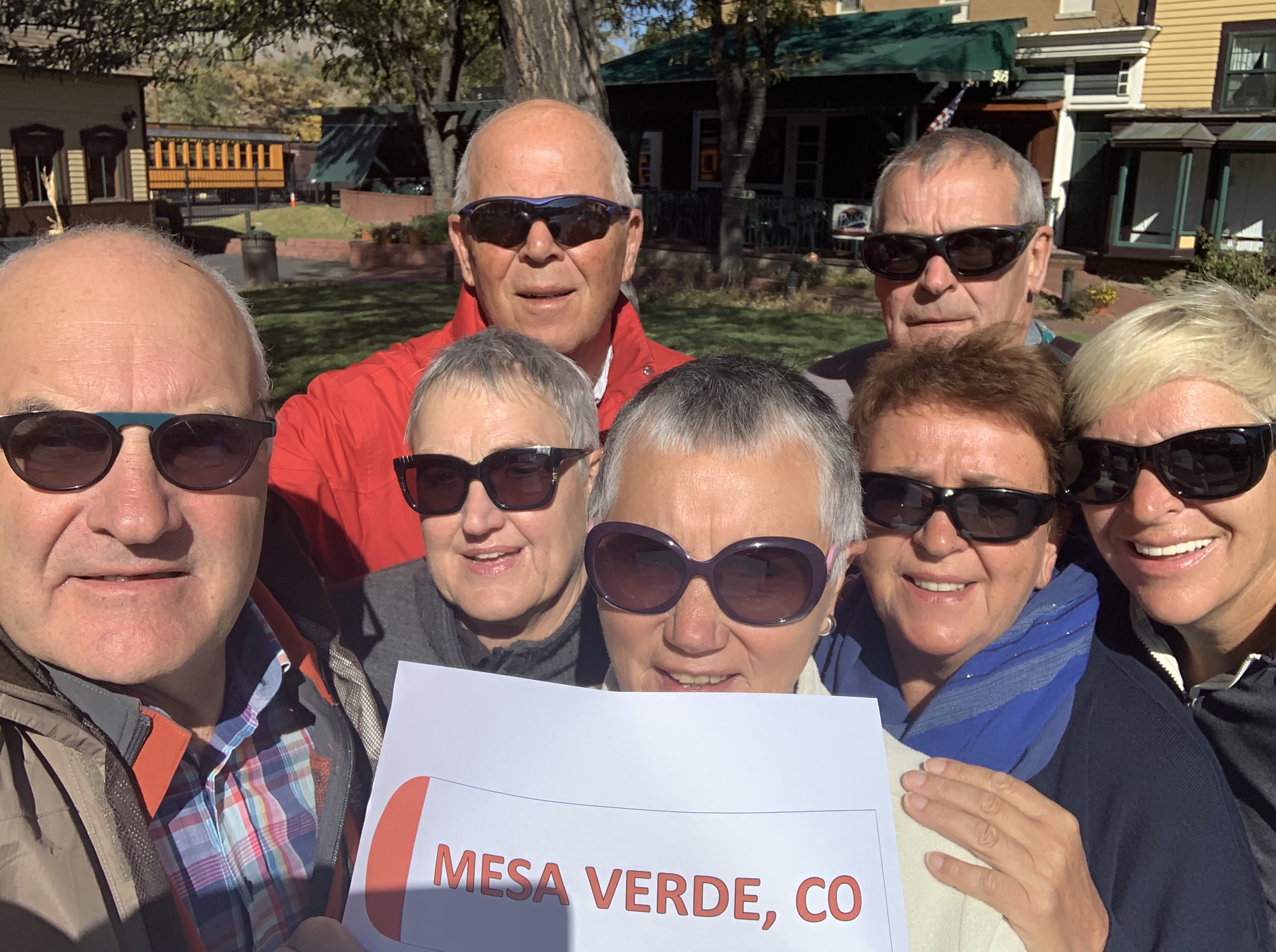
At 8:30am we were all ready to go on the road for another 3 1/2 hours to Mesa Verde National Park.
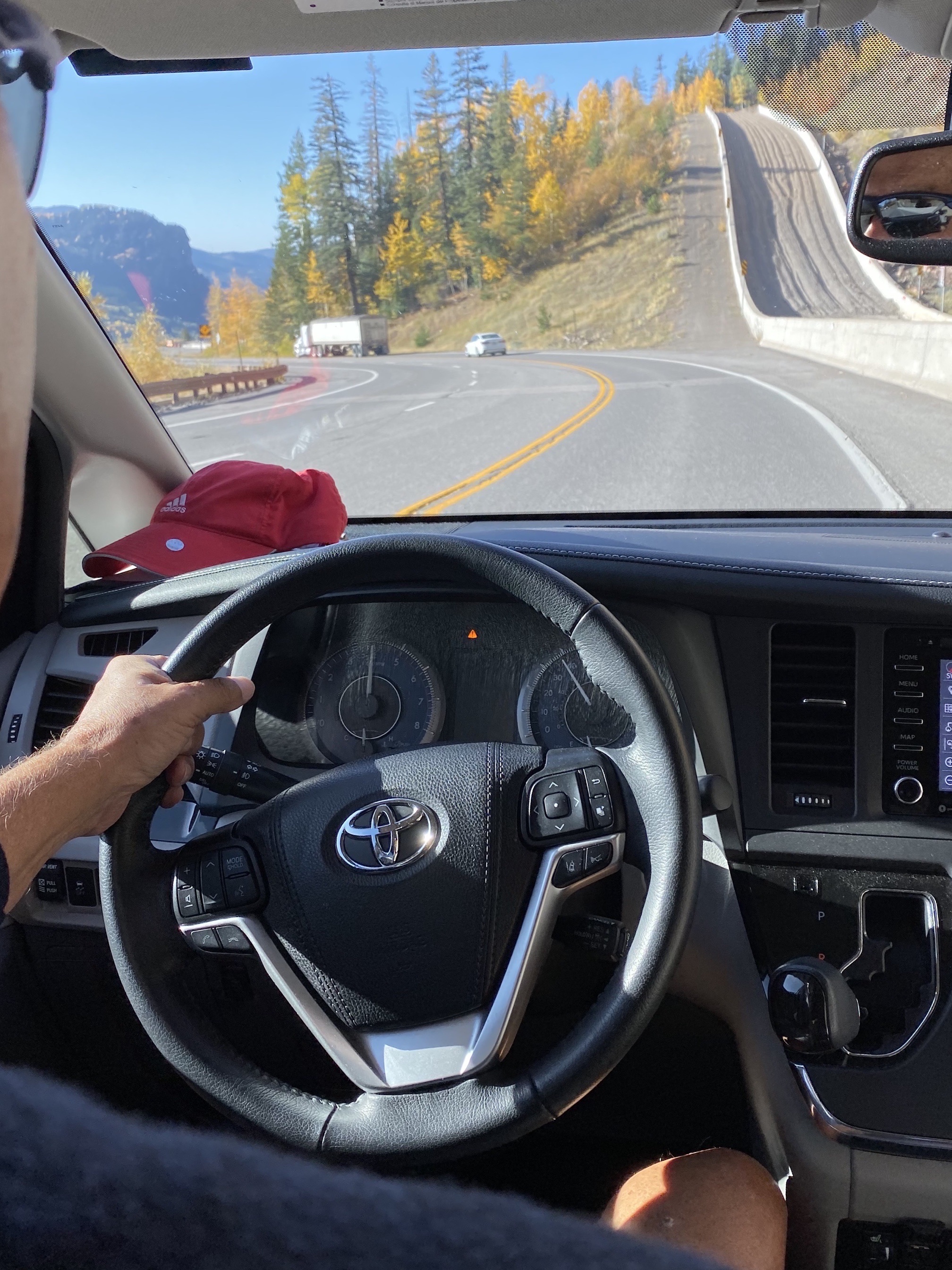
It was again a fantastic scenic drive. We also did the Wolf Creek Pass in the San Juan Mountains. We noticed it’s quite a ski area. Luckily still no snow … this part of US-160 has also 2 runaway truck ramps. Surprising there were tires tracks.
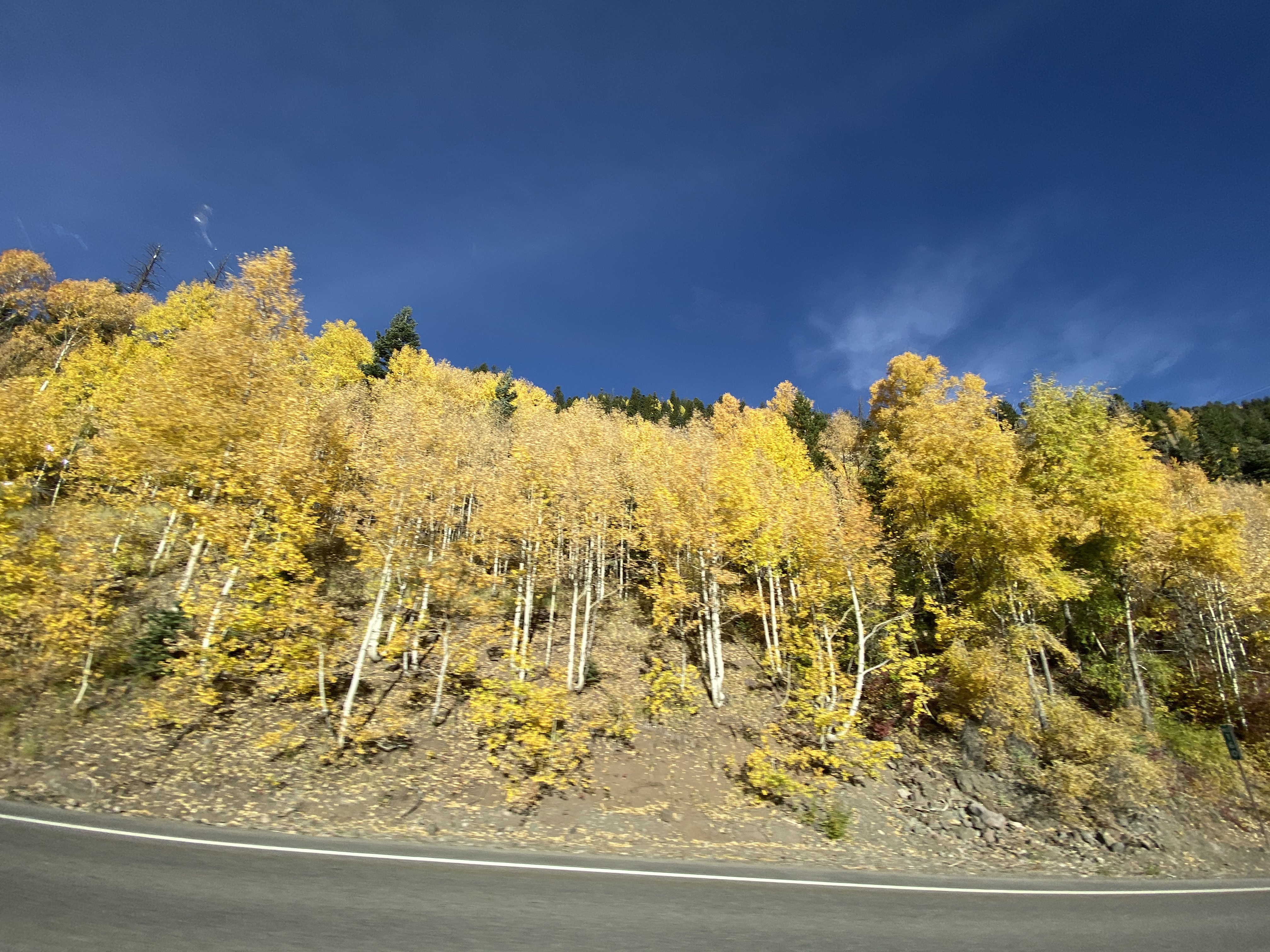
Also Indian Summer was magnificent to watch.
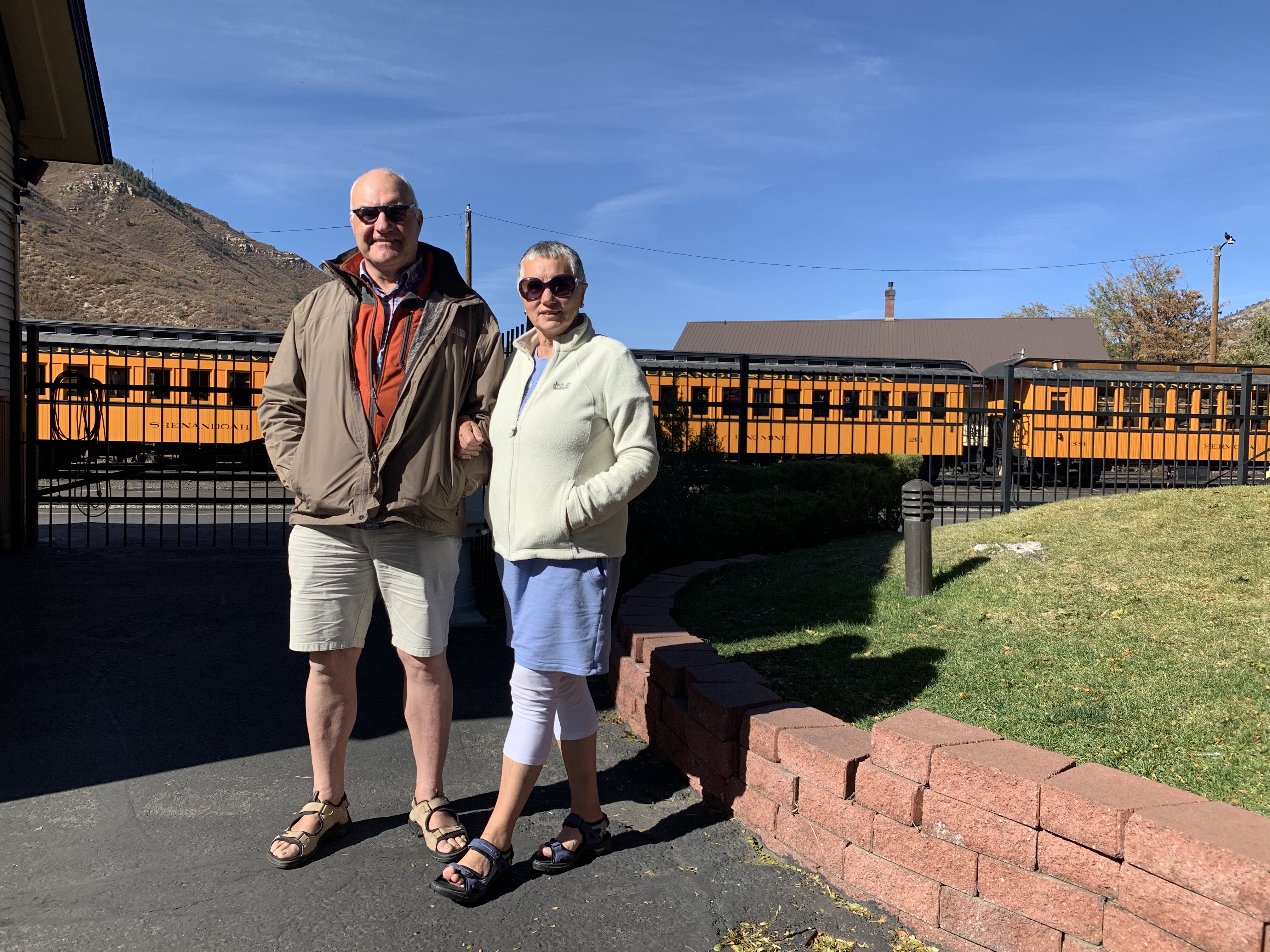
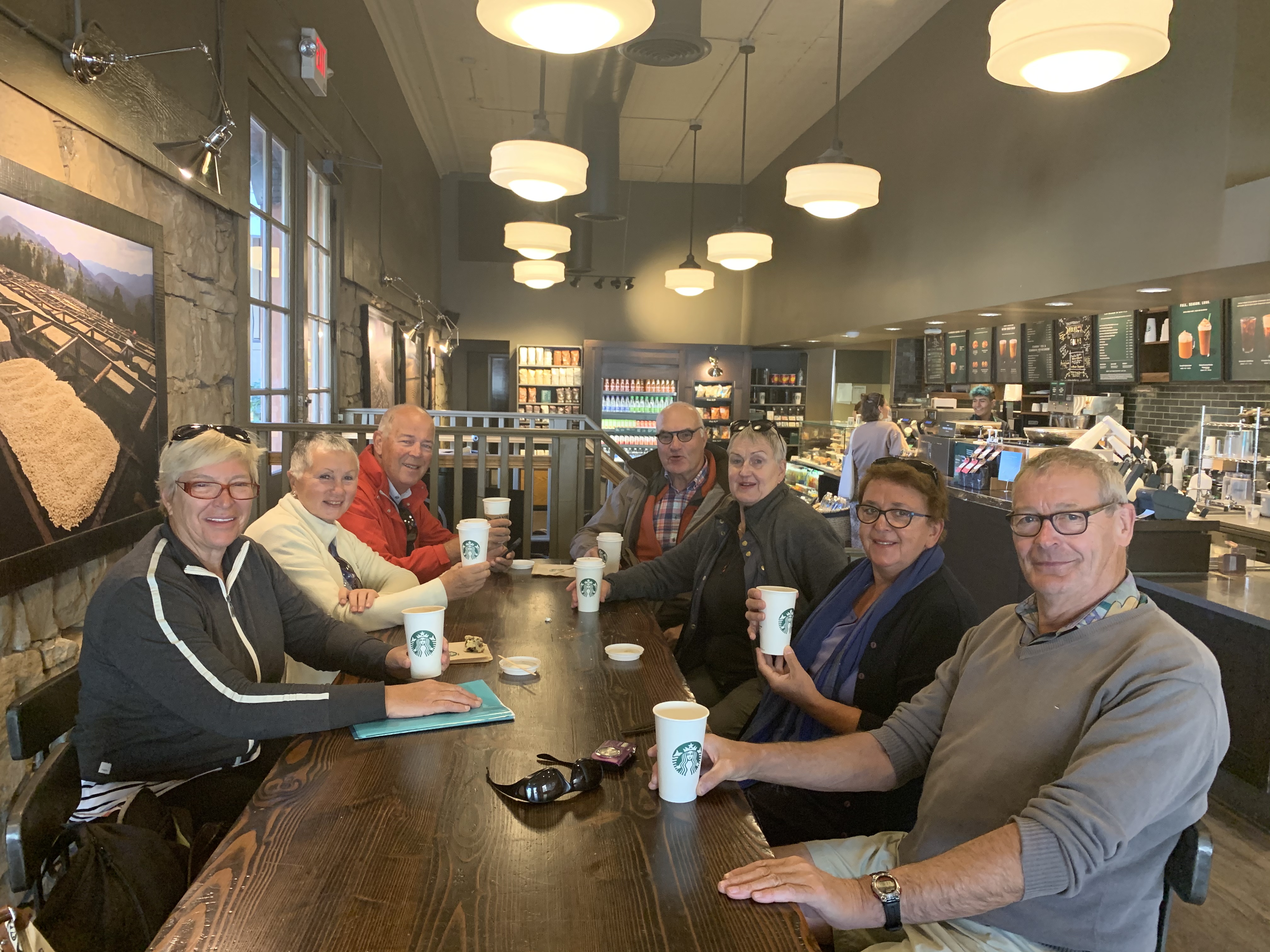
The coffee stop was in Durango, CO. José and Christine visited Durango in 2013 and took the steam train from Durango from Silverton.
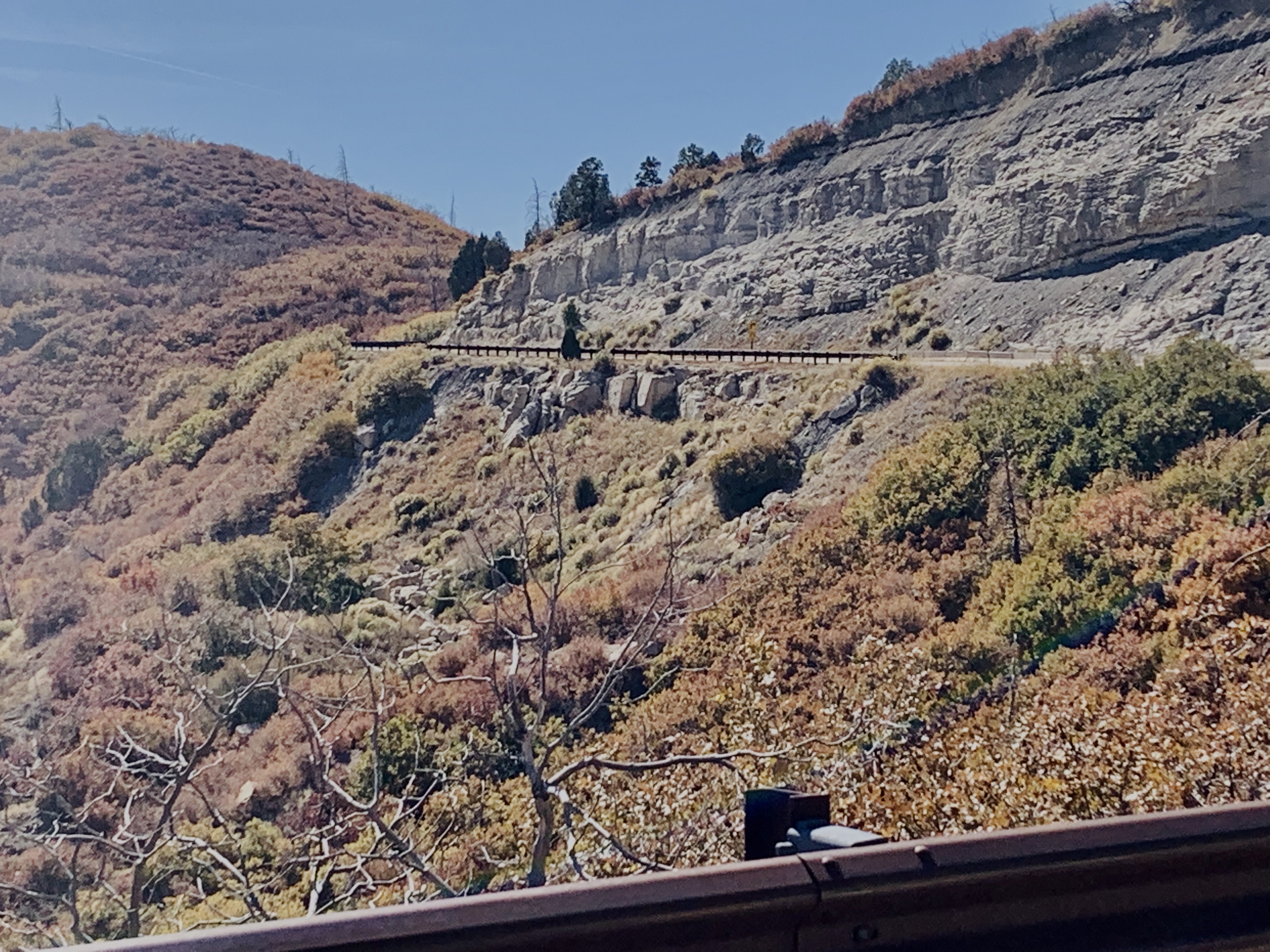
After visitor center, we had to drive a 15-mile trail, with hairpins turn. Oh so beautiful!
We were just on time for our private tour at Mesa Verde National Park. Our guide Mark told us so many interesting stories that I’m afraid I forget half of it.
First story he told us is that it is a matriarch community. Meaning if the wife didn’t like the husband anymore, she puts his sandals outside the house (at the time only a room) and that he is not allowed anymore in her home.
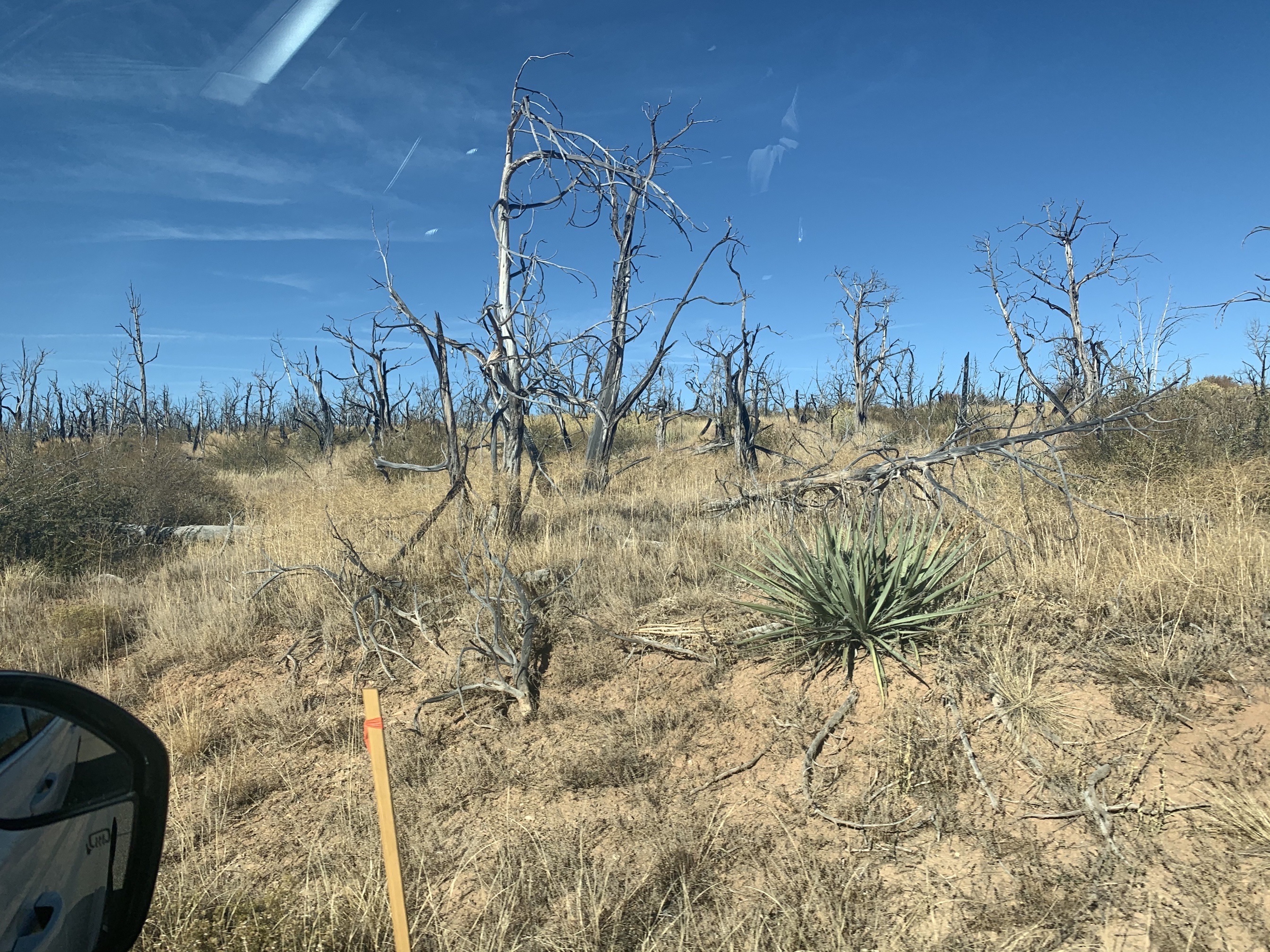
Mesa Verde has know over the centuries climate change and many natural fires. In 2000 and 2002 there were huge fires, when 1 tree was struck by lighting and destroyed lots of acres. Over the years since Mesa Verde became a National Park in 1906 more than 70% of the park is burned. Many of the Piñón trees are gone and it takes 365 years before there is a forest again.
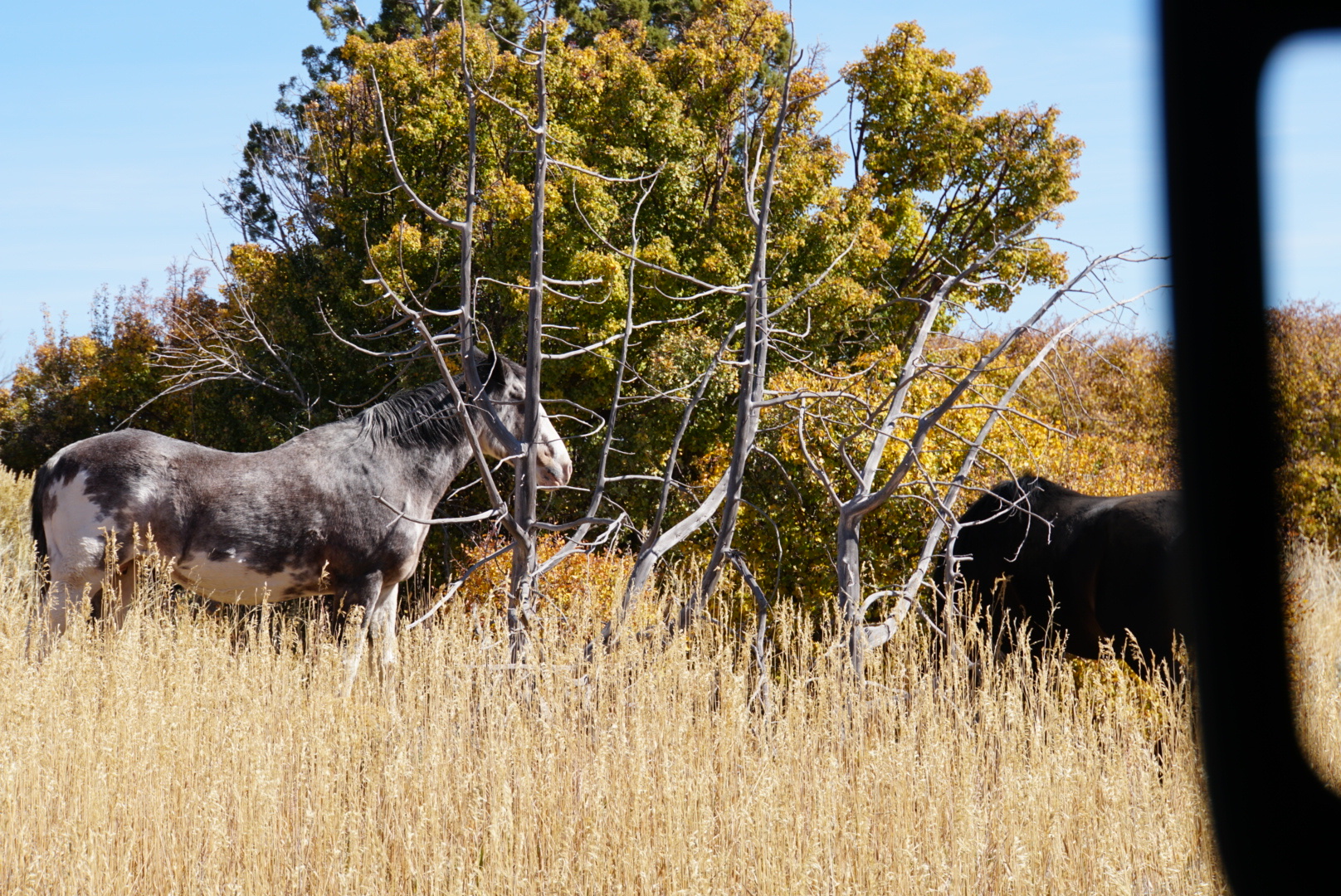
The Indians (Utes and Pueblo) did not had horses. They had turkeys and dogs as pets. We did see 2 wild horses, who were already together for 20 years.
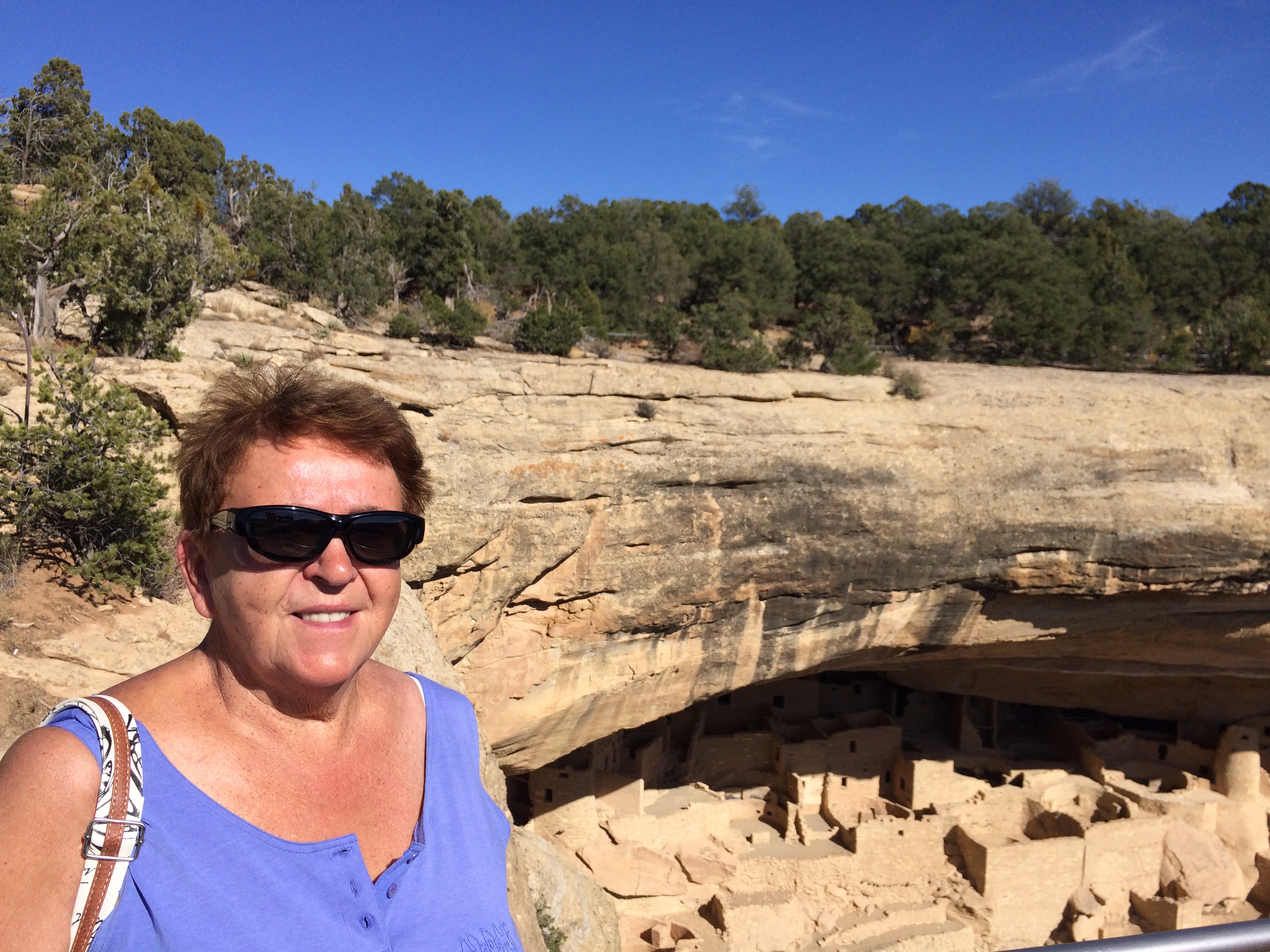
The first dwellings we saw on Far View Sites were on top of the Mesa (plateau), dating between 750 and 1100 a.d. and they were build on top of each other. With the only tool they had ie a rock-hack they have been digging more than 200 dwellings and each dwelling was like 40 rooms and each room for 1 family. And you should see their doors! Even smaller than our windows. At that time people were smaller and skinnier.
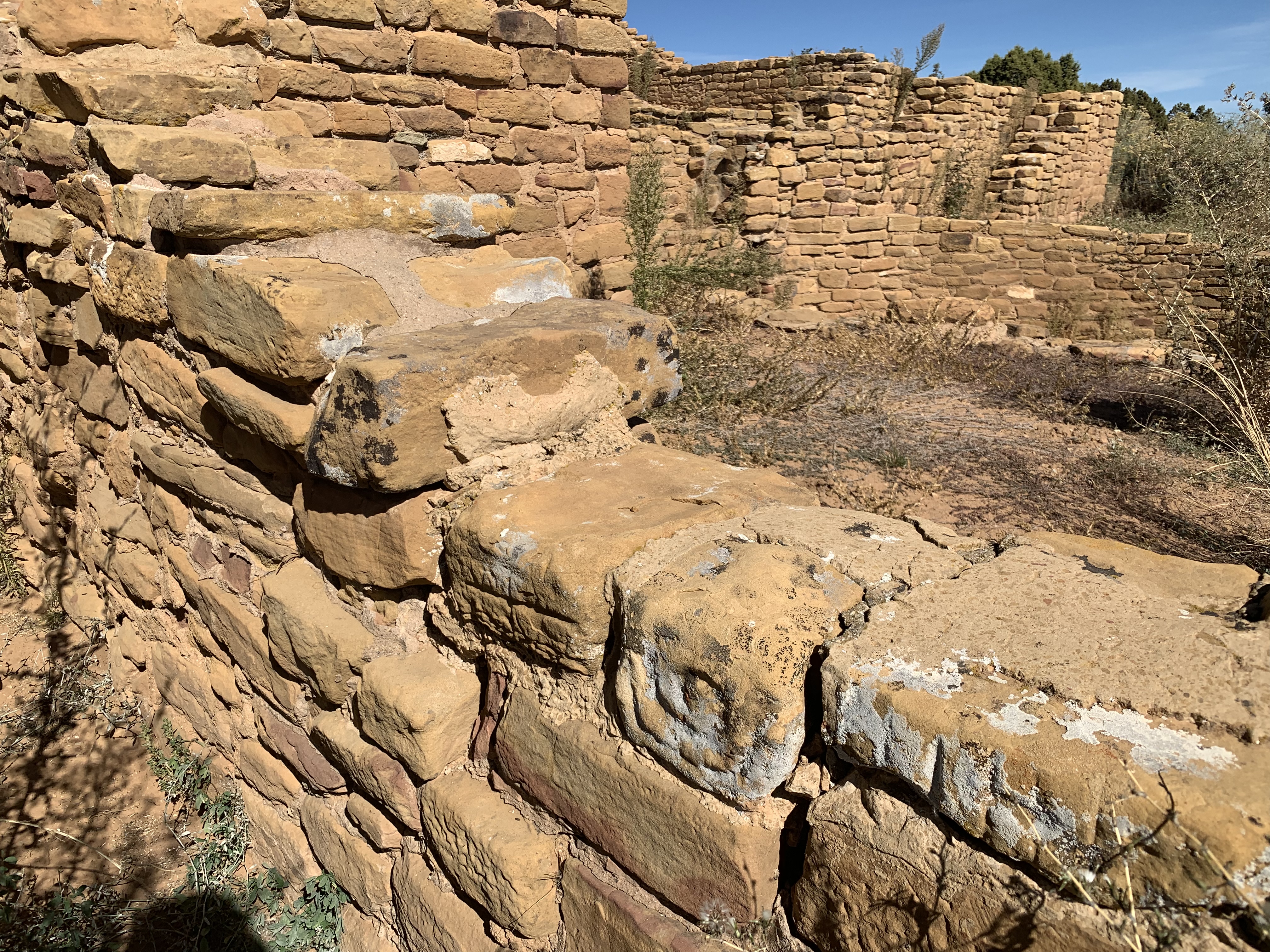
Each dwelling had also 2-3 kiva’s; rounded rooms, where they assembled for religious ceremonies or during winter time to keep warm.
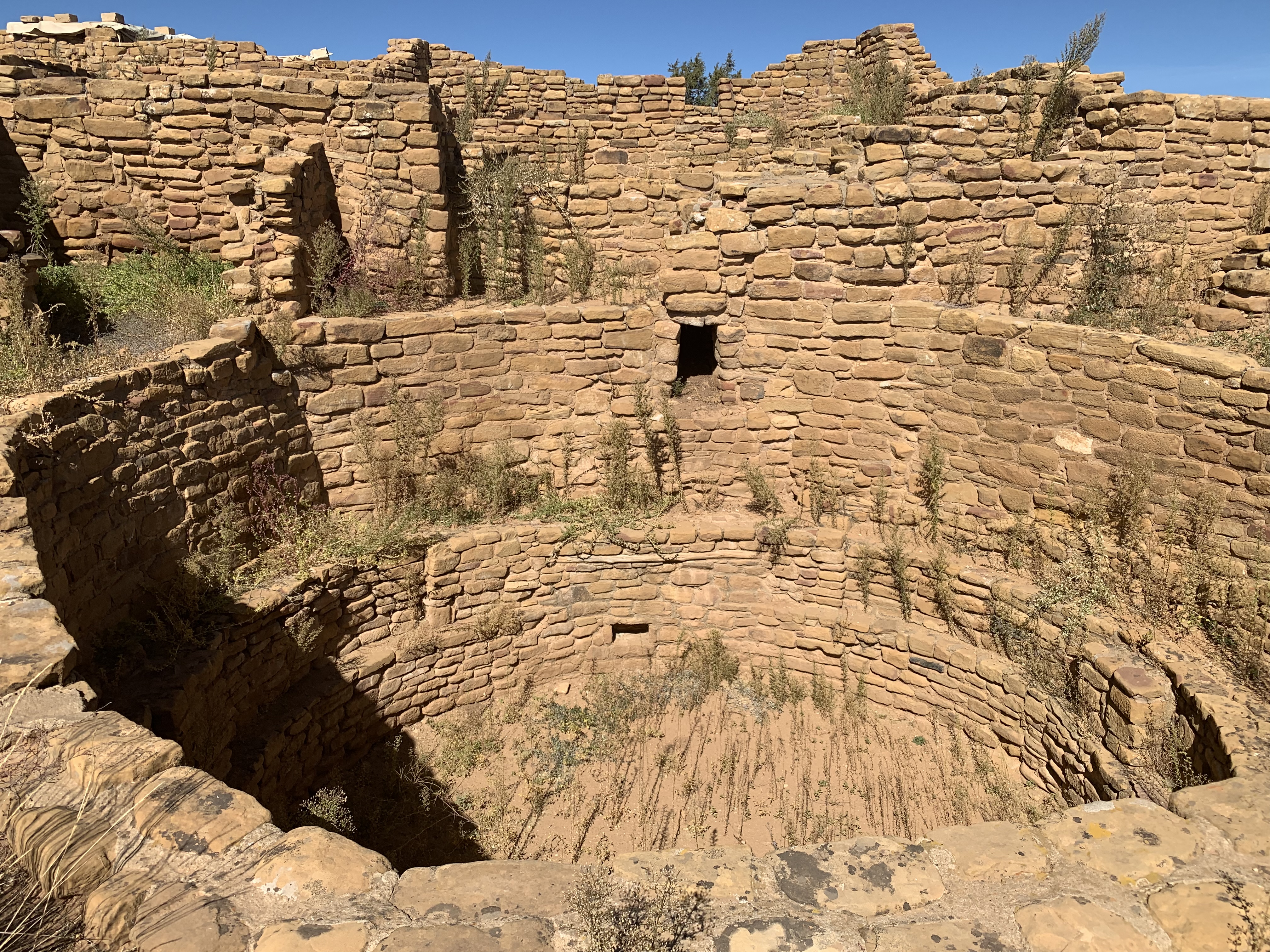
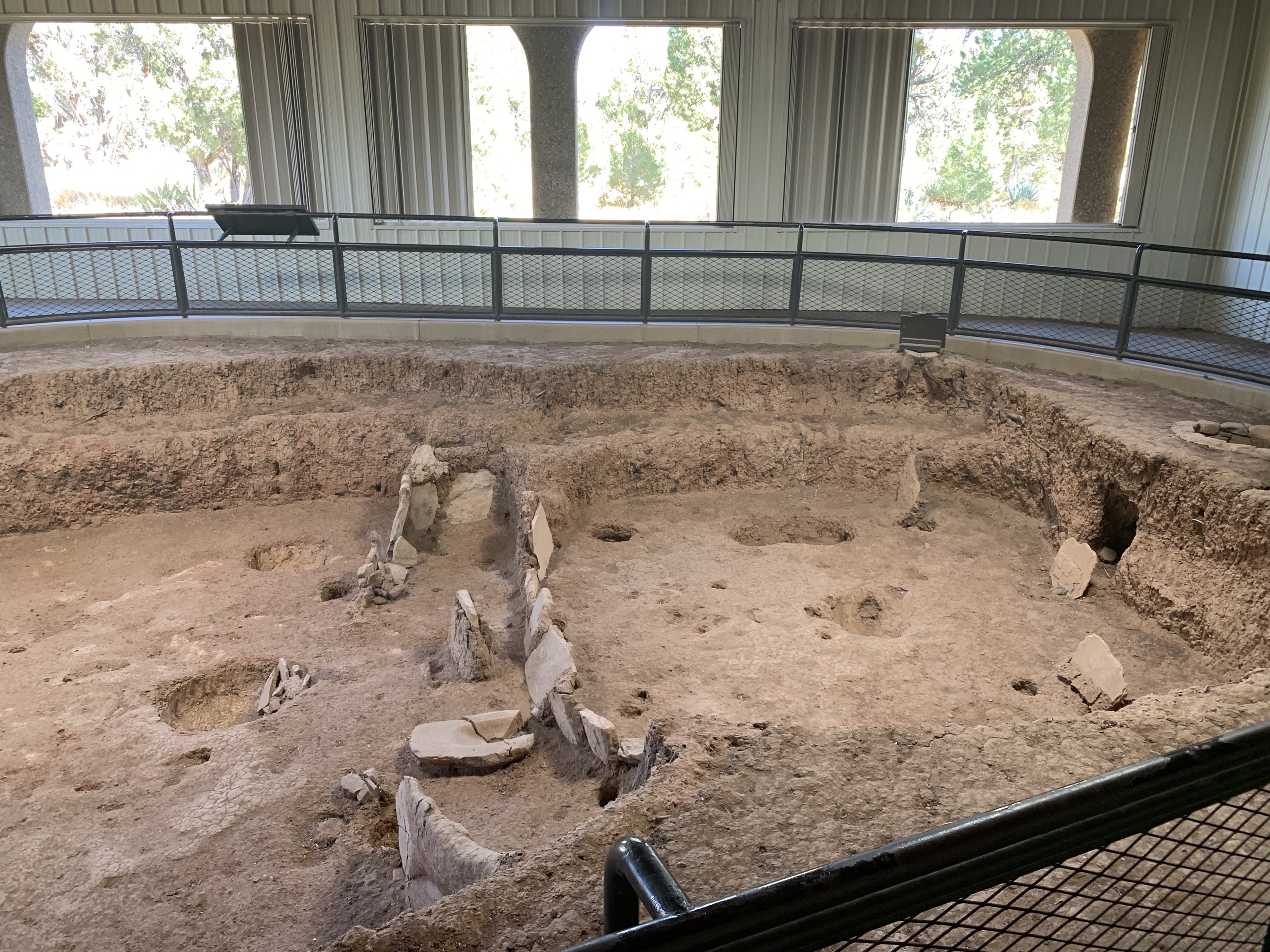
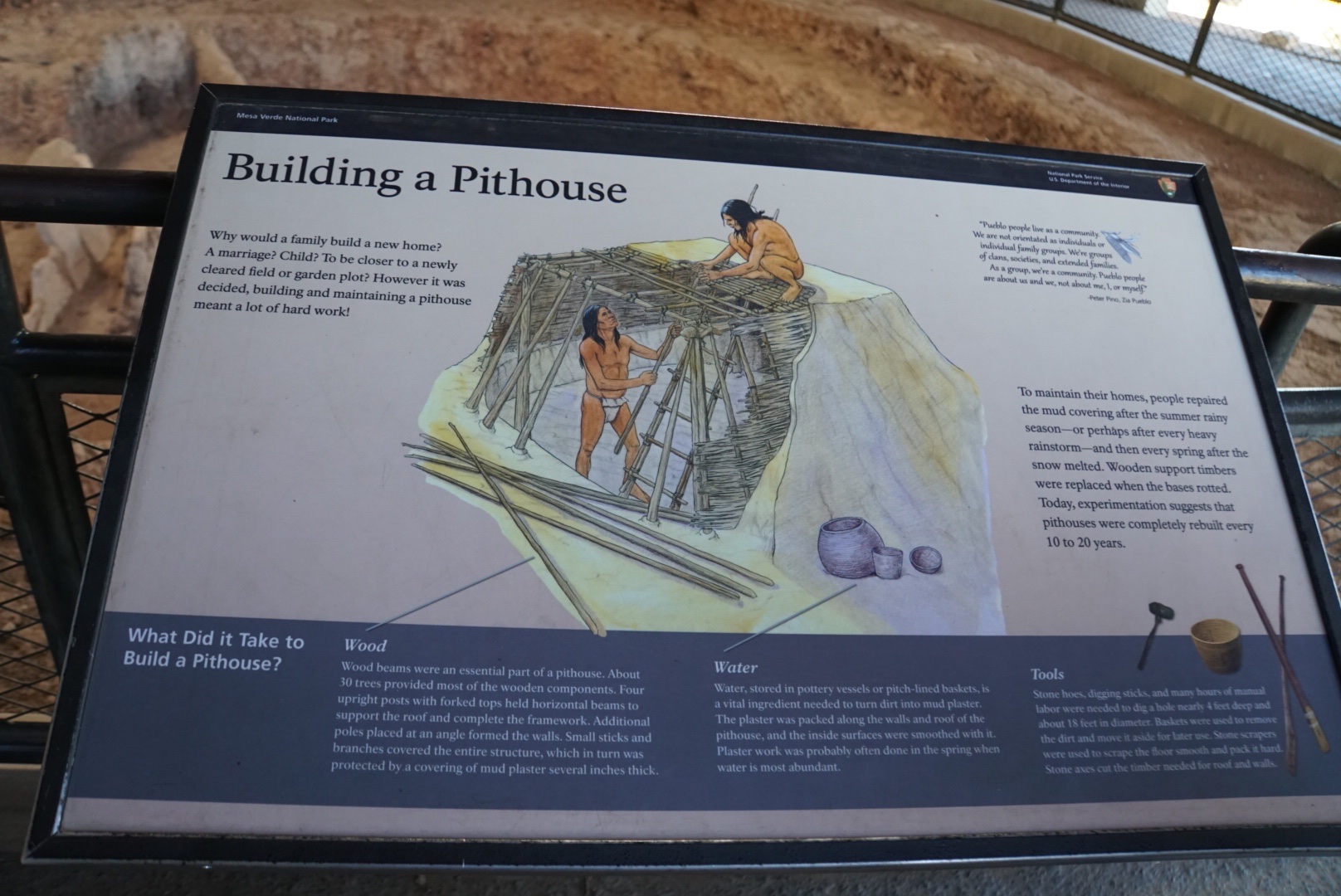
This is a pit house of a later date and they were digged less deep. It’s like the children didn’t want to work as hard as their parents …. Mark also explained us that the top of the kiva’s were tree trunks laying down like the bottom of a basket. Archeologists could easily determine the age of these dwellings based on the age of the tree rings and comparing it with the rings of the trees on top of the Mesa. A Piñón tree can become 500 to 1,000 year old and these trees do not rot, ideal for house building.
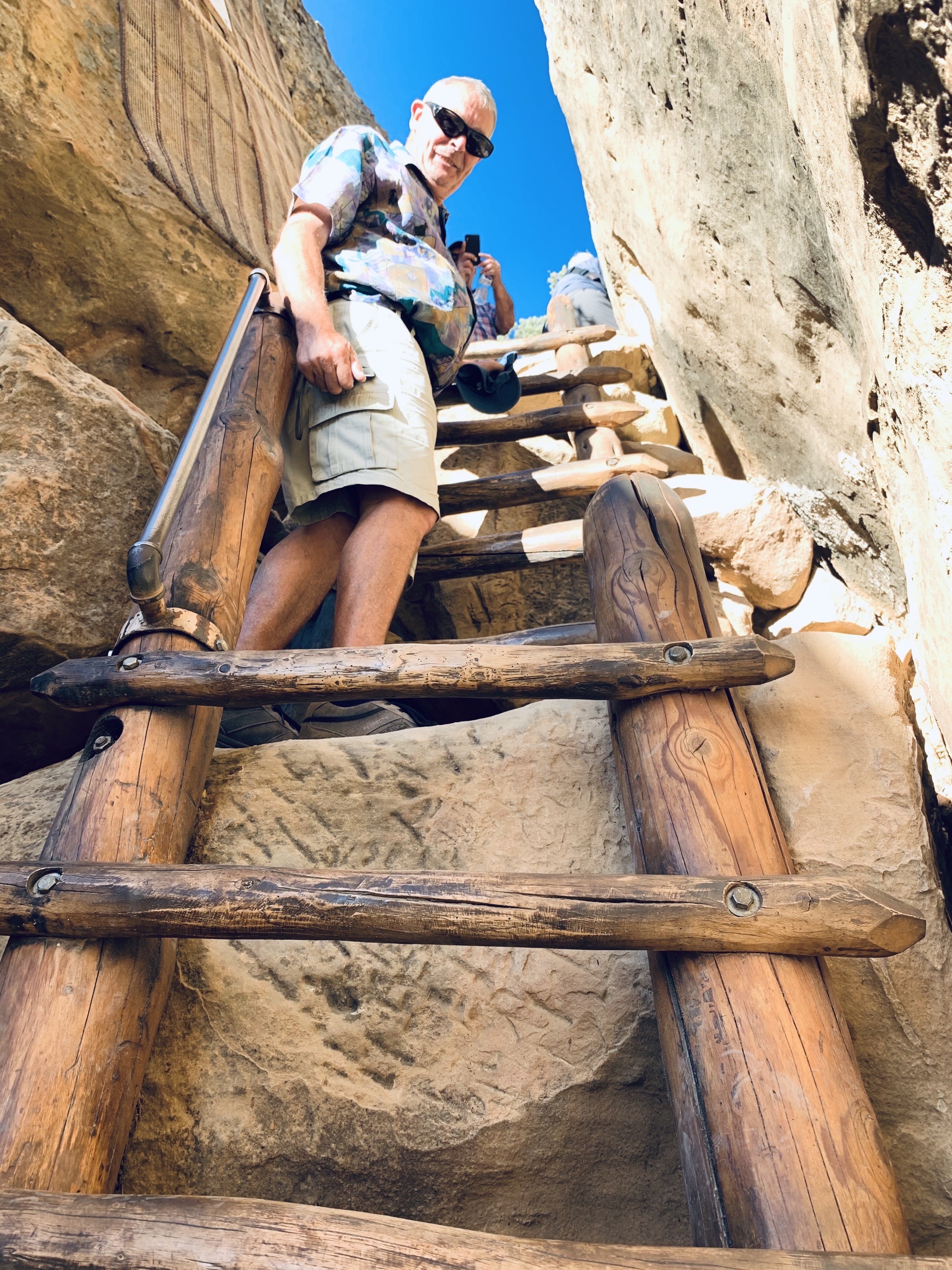
From 1100 to 1200 a.d. the people moved to the cliffs, most probably because there were springs in it. They just looked for alcoves in the cliffs, and then build the walls to form the rooms and towers (4 floors high) and kivas. Unbelievable they build all this and then everyday going up and down. You could still see some steps in the stones for climbing. They did go down for water or to clean their body as it was covered with soothing from the fire there was in each room. For us, tourist, was it already an experience to go down to the Cliff Palace and climbing up.
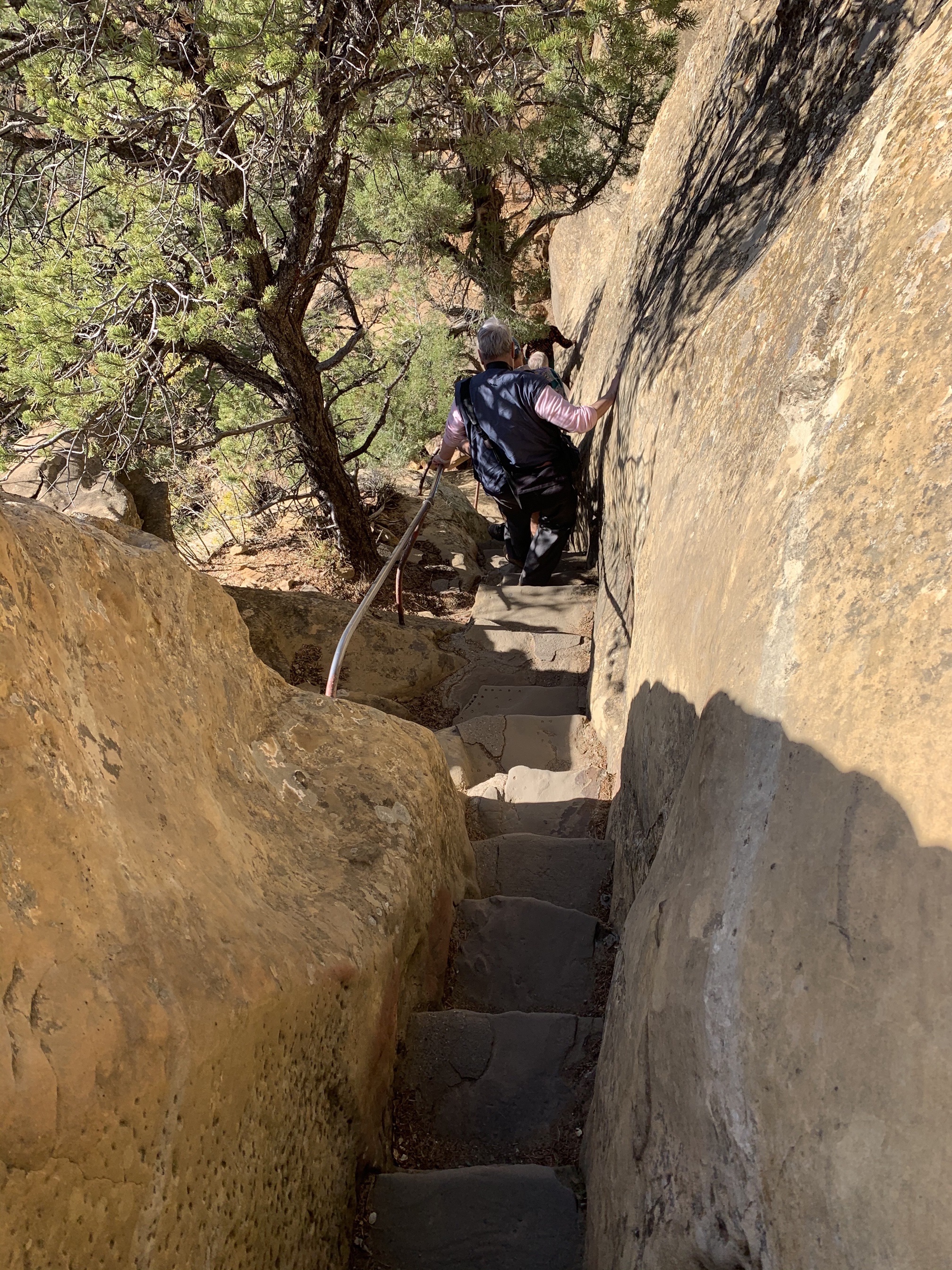
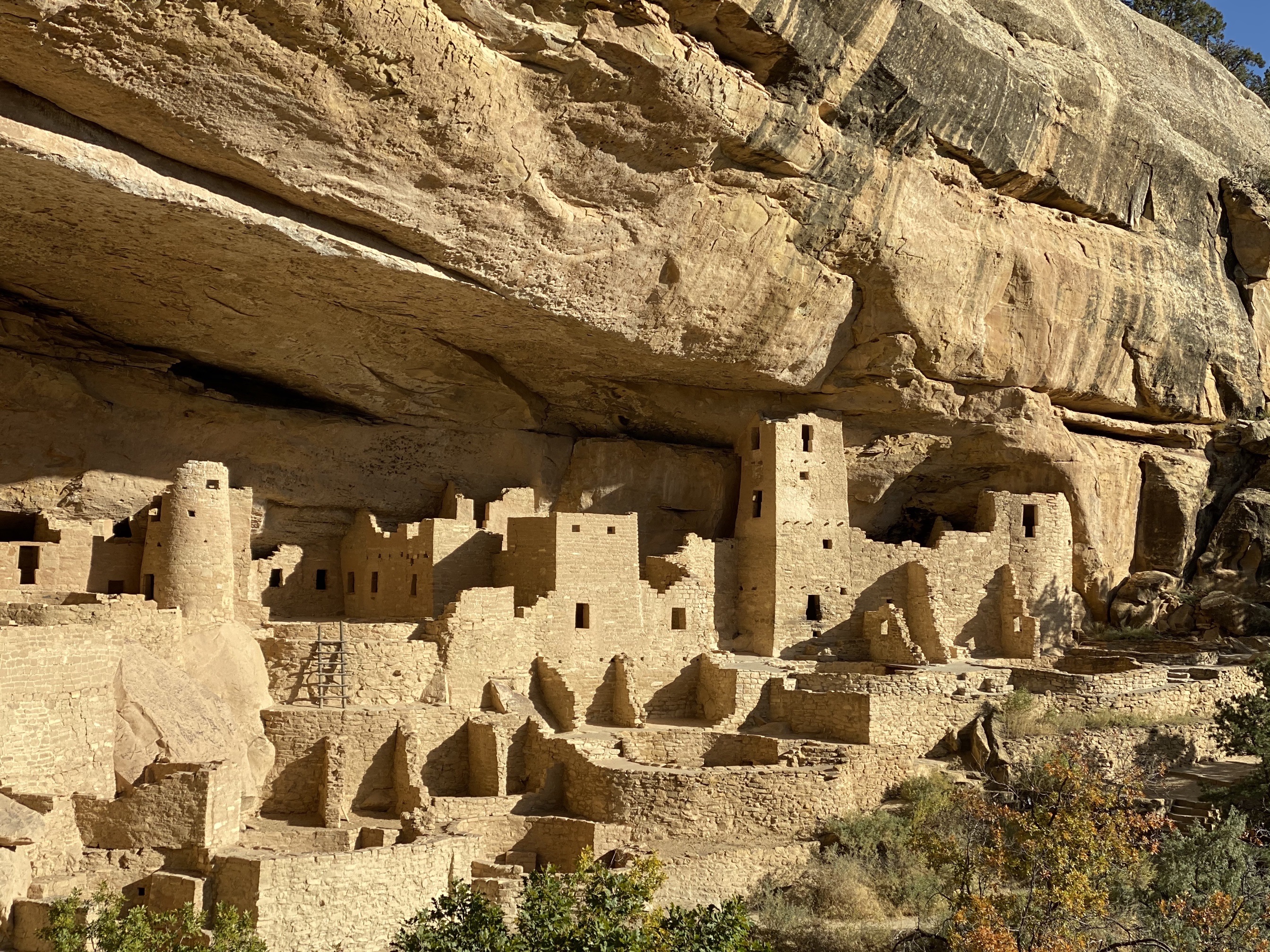
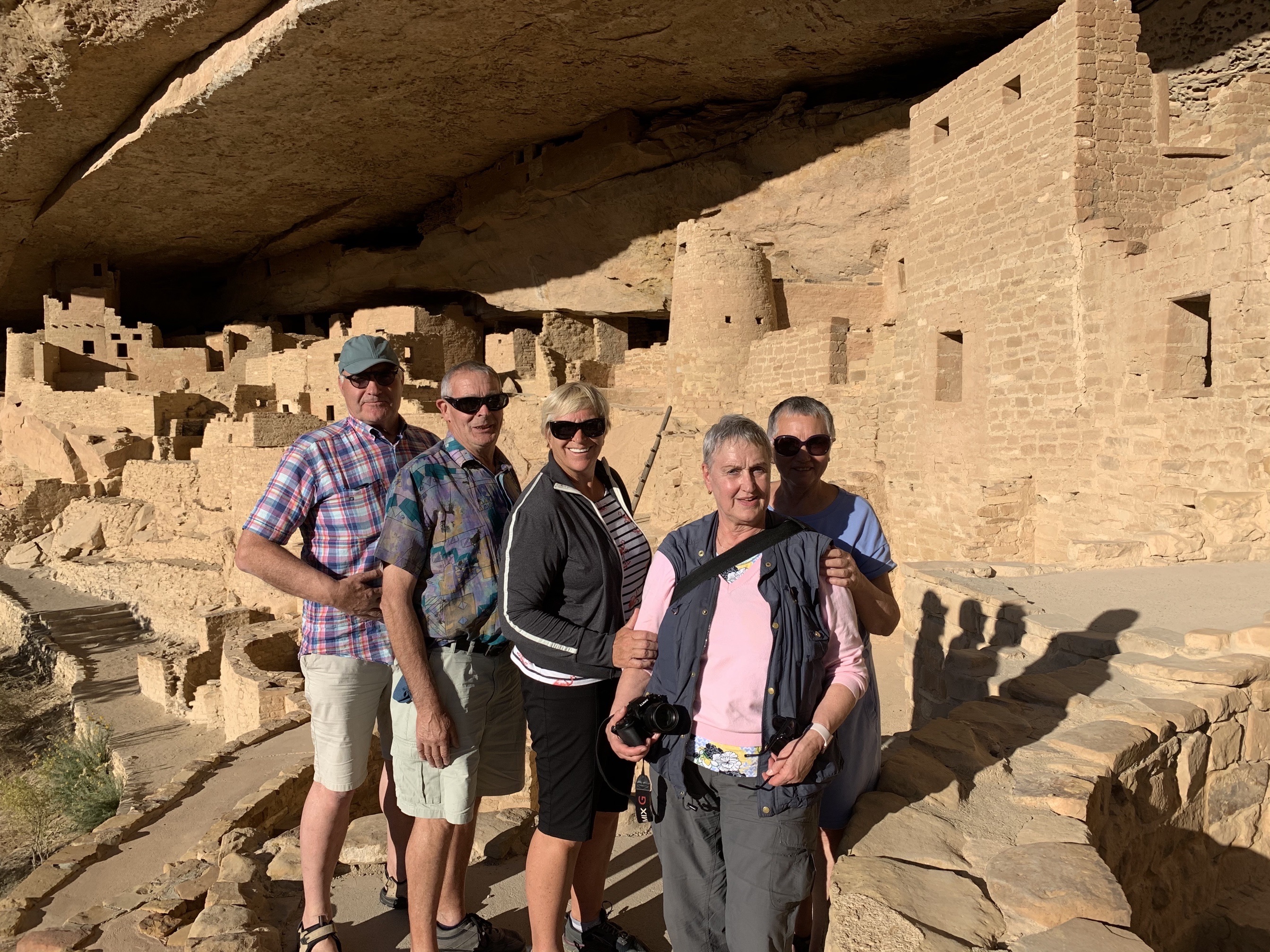
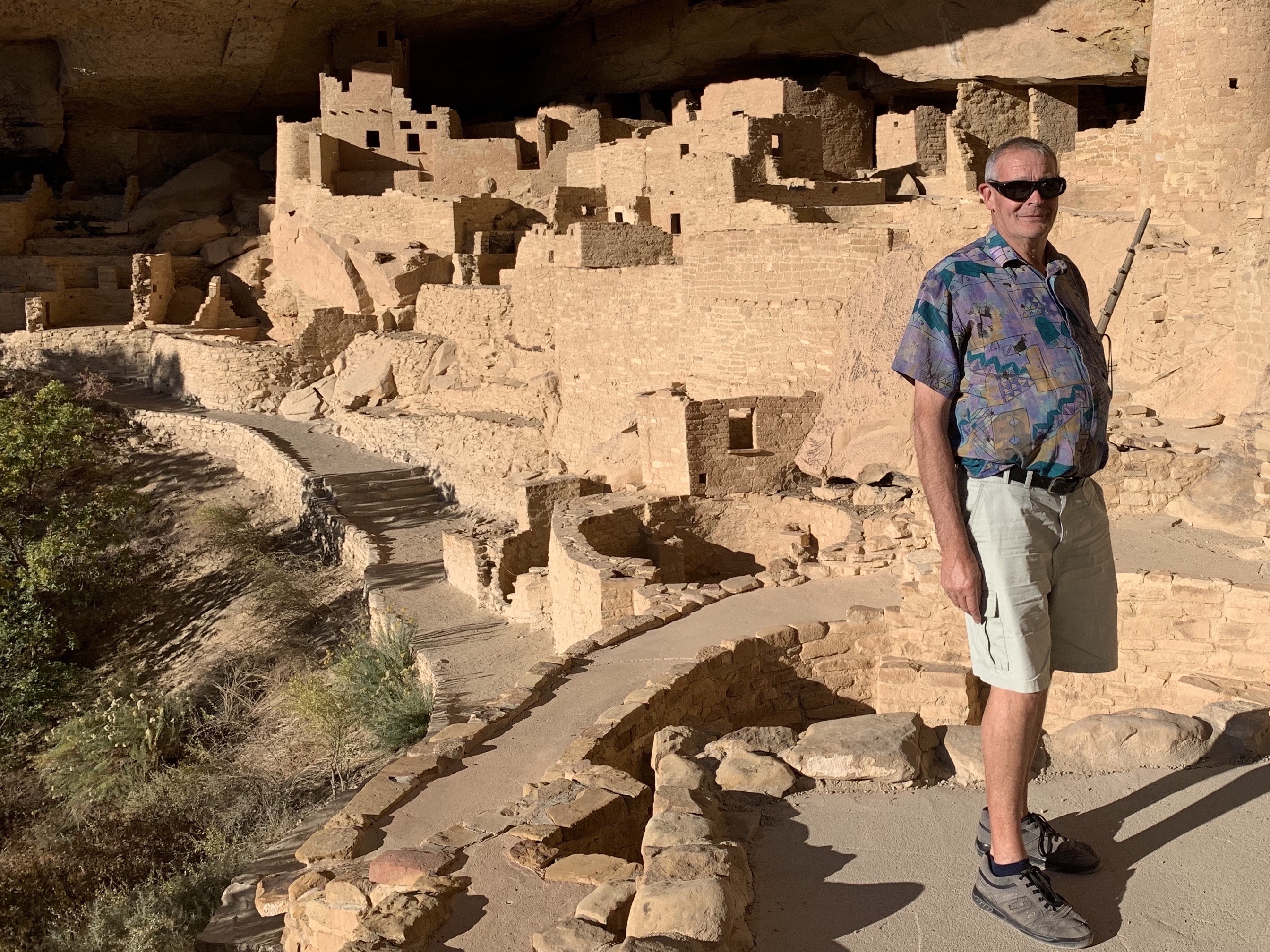
Dany and Arlette did the scenic drive on their own and also a view on Balcony House
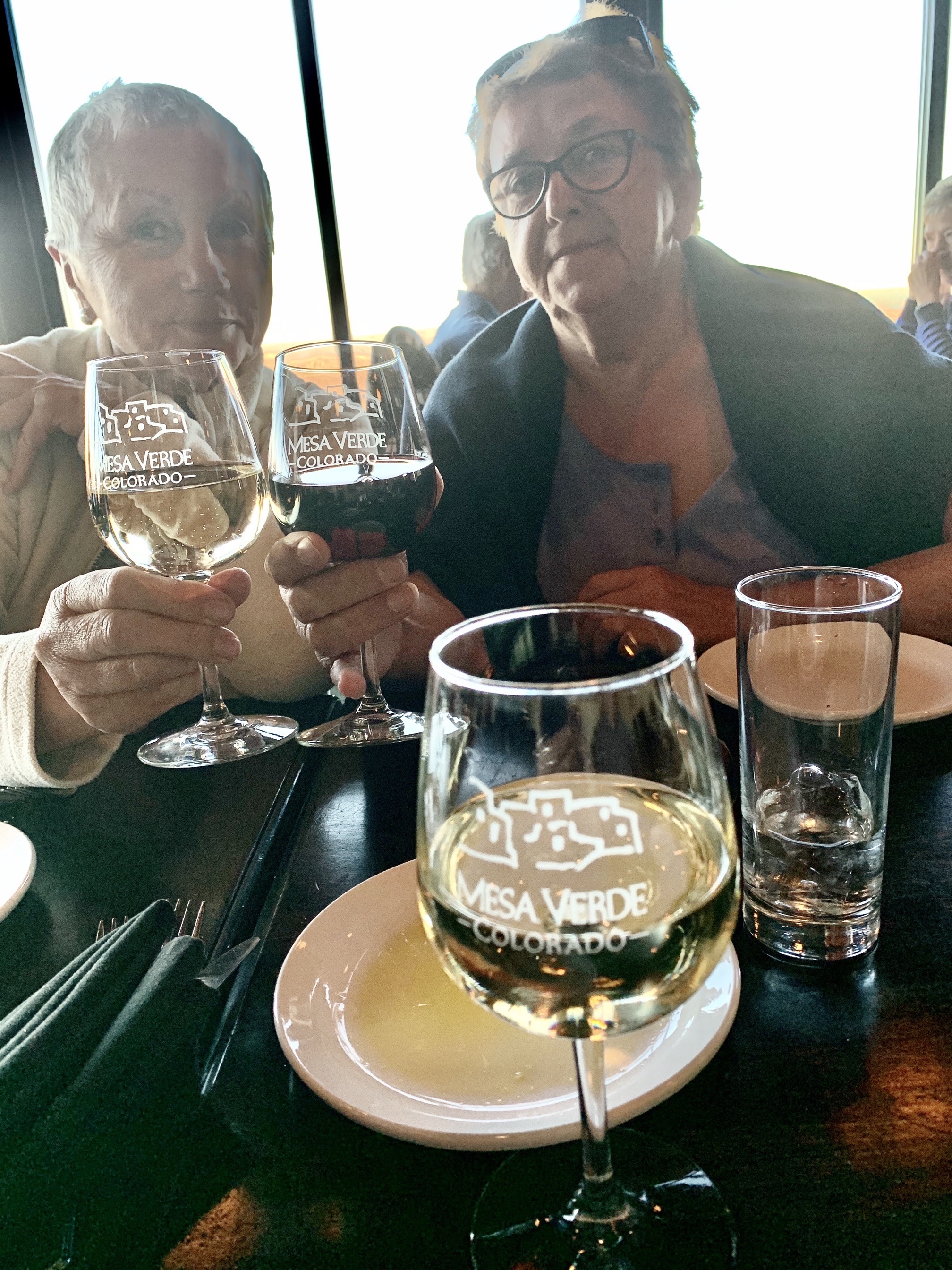
Dinner was at the restaurant of the Far View Lodge where we stayed in Mesa Verde National Park.
 2019canyontrip